

“Identity at the core” of Alter Alter stories
The book launch for Alter, Alter highlighted how the story collection expands the notion of identity by exploring altered states of consciousness.
This June, author Toti O’Brien celebrated the release of her seventh short story collection, Alter, Alter (Elyssar Press, 2024). The book launch began with a 20-minute reading from the book, followed by a dynamic interview by literary translator Chris Smith.
Watch the full video for a recap and some quotes that we found moving.
If it’s possible to be truthful, then the characters in Alter Alter are truthful
The question of “reliable versus unreliable” narrators is one that appears in many surreal short story collections, including Alter Alter. In any collection where readers are invited into the minds of a character, it can be hard to separate what is “actually” happening from what a character perceives.
Given that O’Brien explores how altered consciousness may influence our perceptions of knowledge, the author boldly threads into territory where most characters are telling the truth–as they perceive it. Chris Smith, articulates this well in his question–following the reading–of characters and honesty.
“Are the characters in the story distorting reality themselves?” He asks, roughly twenty-five minutes into the book launch.
“None of the characters in the story besides maybe in one story are ever lying–so definitely they are not distorting anything. They are all as truthful as being truthful is possible. Pretty much naked and vulnerable.”
Diverse consciousnesses explored in Alter Alter include: infant memories, perceptions of life while in a coma, the mysterious realm of the imagination, and the “in-love” brain. Or does reality change these states of consciousness?
O’Brien does not explicitly answer the question, but is bold in exploring it.
Visual arts like sculpture, painting, and performance influence how O’Brien writes
“I see a relationship between visual work and my writing because I realize that I compose the pieces. I call my stories–or anything that I write–a piece,” O’Brien shares.
From different angles, different patterns emerge that may otherwise remain unrecognized from a distance; this mindset influences how O’Brien explores ever-changing perceptions. Solidity and permanence are not a state the author lingers in for too long.
“Identity is at the core of many of these stories”
In many of her stories, characters are uncertain of who they are and what that identity means. “General Gate” asks readers to contend with bigger questions like “What is identity?” and, “When my passport is taken away for no reason, what remains of who I am?”
Towards the end of the book launch, an Author Q&A explored the relationship between writing, truthfulness, consciousness, identity, and vulnerability. Some closing questions speak to how when paperwork confirms who we are–legally, nationally, economically, etc.,–is it possible to exist beyond these structures that limit how we are allowed to exist and move through space?
Alter Alter speaks to this impossibility of reckoning with some of the absurdities of being human, including how paperwork, perceptions of mental acuity, age, nationality, and laws, do and do not define us.
Thank you to everyone who could make this event possible, and to everyone who supports indie authors and small presses, thereby nourishing a diverse ecosystem of stories in the world.
Watch the full interview on YouTube and buy Alter Alter today.
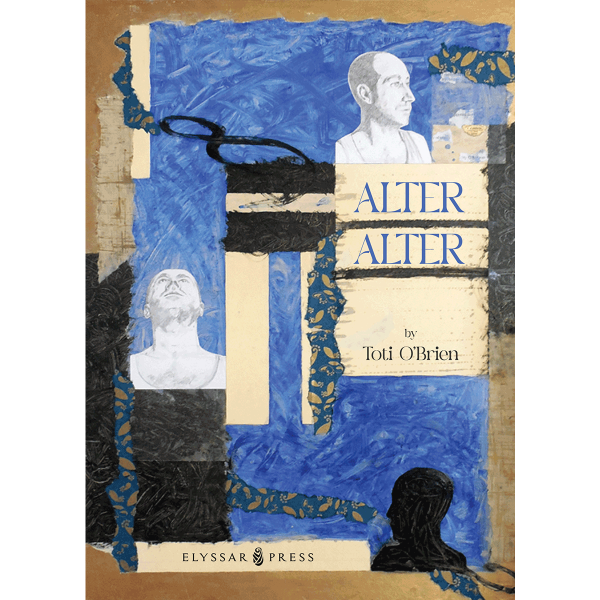
Alter Alter by Toti O'Brien is a captivating collection of short stories that seamlessly blend the real and the surreal, delving into themes of childhood, displacement, estrangement, and the multifaceted nature of identity.
Structured into seven distinct sections, each narrative navigates altered states of being—ranging from neurodivergence and mental illness to love, death, and sisterhood—offering a profound exploration of otherness and the human experience.
O'Brien's prose invites readers into a world where the boundaries between reality and imagination blur, encouraging introspection and a deeper understanding of the self and others.
This book is ideal for readers who appreciate introspective and experimental fiction that challenges conventional narratives and delves into the complexities of identity and human connection.
Format: Paperback
Language: English
Length: 514 pages
ISBN: 979-8-9853686-8-0