

My big dream to start a small press
By Katia Hage, founder
When the idea of Elyssar Press started forming, I knew nothing about publishing. I did know that my love for stories was deep and that my sister was an expert with Adobe InDesign. It seemed like enough to take a risk and start the small press I’d been dreaming about for years.
But nothing could have prepared me for what it really means to launch a publishing house in the 21st century. Looking back on these past five years, I see the failures, the tentatives, the successes, the joys, the frustrations, and all the times in between when I just wanted to give up and let go.
I hope my experience can shed some light on how to take the first step to make our dreams come true.
I started by telling people about my big dream.
For me, the first step was simple: I started telling people, artists, writers, and colleagues about my big dream to start a small press. I figured I could publish a book, especially with the combined skills of my sister and I. It was 2019 and I knew–after learning about an exciting collaborative project between Cindy Rinne and Bory Thach–that I wanted more work like theirs out in the world. I was eager and excited to publish their beautiful poems. When I told the co-authors (Rinne and Thach) about this, they were interested and took a chance on me, too, since I was new to publishing.
So many things have happened since that initial book, from learning the ropes of running a business, to gathering a team that supports the press in all its facets, to devising a mindful slow way of working, to creating a gentle space where authors, editors, promoters and publishers are on the same page.
There is more to be shared about how Elyssar Press began, much of which we wrote about in a previous interview. Right now, I’d like to share the three important lessons I’ve learned about publishing over the last five years.
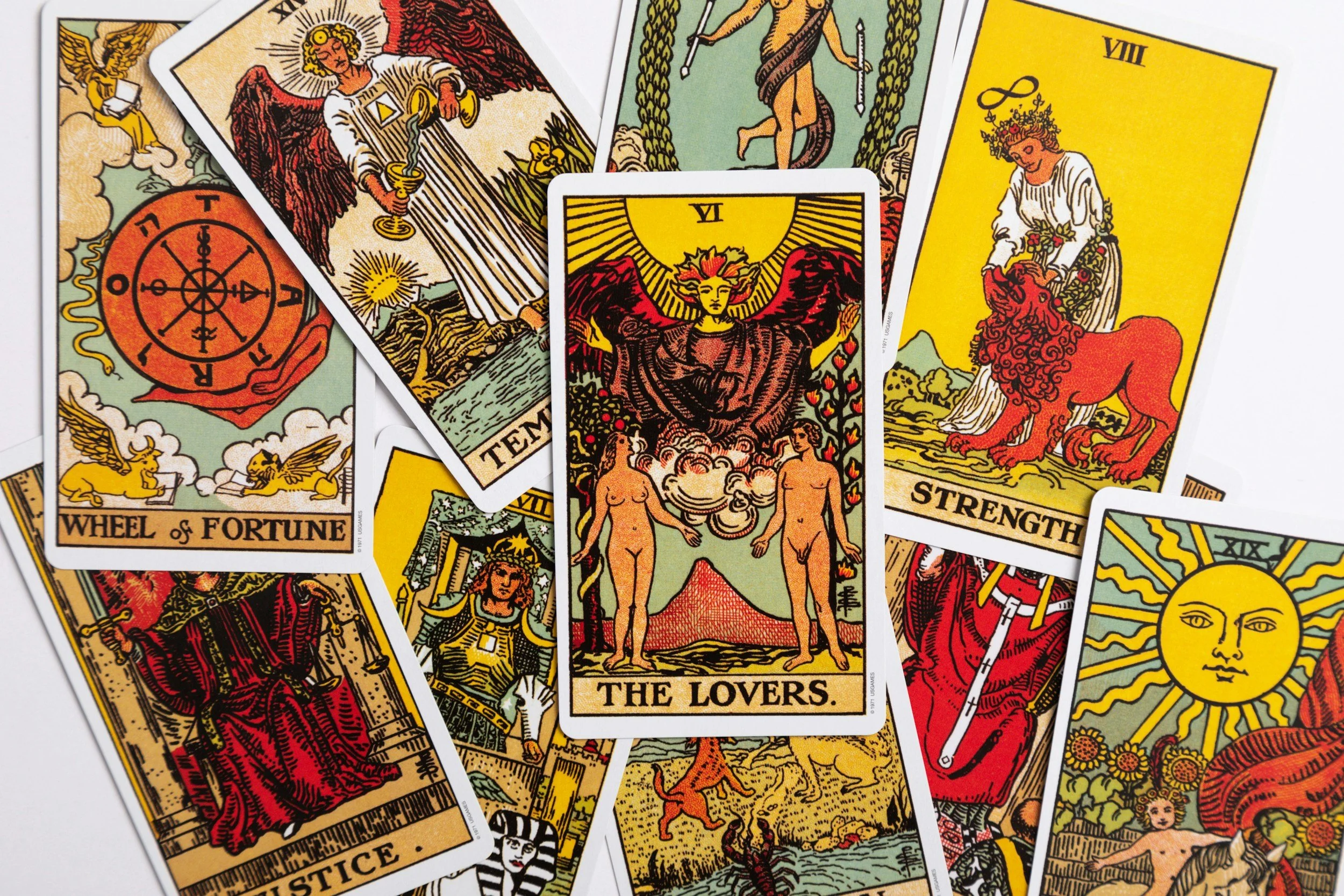
Publishing lessons drawn from the Tarot deck (and life)
Lesson #1
One of my favorite Tarot cards is The Fool who represents the beginner at their best. This encompasses both the freedom and innocence to attempt a new journey, unaware of the difficulties that lie ahead. Excitement bubbles in the body when faced with limitless frontiers. Few items does the Fool take along, for they do not know what they might need in the long-run, only what will sustain them for the first few steps. The Fool trusts that everything will be provided along the journey and will appear at the right moment: the people, the community, the tools, and the skills.
There is wisdom in being present on a journey, and in trusting the process. This was true for me in that each month presented new needs, considerations, and skills. It would have been overwhelming for me to look too far.
Lesson #2
Another one of my favorite cards is The Apprentice. This figure brings willingness and curiosity to broaden their horizons. They know the importance of deconstructing prior knowledge in order to build new knowledge. They realize that as time goes by, revisiting concepts and beliefs is difficult, as is the ongoing process of unbecoming and unraveling.
It is knitting a beautiful sweater only to pull the string again and knit a new one. The string is the same as is our nature but the possibilities of becoming are endless.
Lesson #3
What are we seeking when life becomes drab and knowledge overly masticated? My great grandmother always counseled me to carry a bag of dreams. “Whenever one dream becomes reality, just pull another one,” she said. I think she meant to stay curious on the path of life, and to be willing to open the satchel to a new door that calls out to us. A continuous spiraling growth where everything we have learned becomes compost for what is becoming.
The key to starting anew is to take only one dream at a time and to give it a chance to become. That means to give it time, honor its needs for practice, for research, and allow it to transform us and our perspectives in life.
This is what I do with Elyssar Press.
Our books are the dreams we turn into reality, and throughout this process we strive to pay close attention to how the process of each book unfolds. We focus our efforts on one book at a time, and give it all of our attention, as it comes into existence.
To start anew is not a decision taken lightly
As I think of what my grandmother told me about dreams, I also remember how new paths can be filled with tears, frustration, desperation, but also with an insatiable will to keep going. That persistence means we will become molded by what we learn, until learning itself becomes an expression of our nature and an exploration of who we are.
Following those thoughts, as someone who loves learning, I recently–relatively speaking– decided to start learning the qanun, a traditional Arabic instrument, harp-like, with 82 strings. My journey started with aches and pains in my hands as I put in the time, beginning with thirty minute sessions and gradually, as my hands strengthened and learned how to respond to the instrument, moving up to several hours.
Giving my practice this level of devotion and space was a challenge. I wanted to give myself a chance to become proficient at playing. And yet, it was hard to learn something so new for me. I would break into tears in front of my teacher, because I could not memorize short pieces of music or remember a technique. I had to face the shame bottled inside of me–my thoughts of being inadequate, not enough, or unable to express myself through music.
I spent a few hours with my therapist exploring these emotions and wounds as they arose from the mere practice of the instrument. My teacher would comment on how my feelings were not coming through my playing, and I would fall into despair that my skills were not enough to portray the soft, the strong, the incoming. As a beginner, I started observing, listening, querying about my own muscles, discovering and questioning ways to portray what feelings inhabited me. It took hours of recording and listening back to myself, enabling the voice of a kinder inner critic who was both gentle and honest. That was challenging.
Starting anything new takes perseverance and support
These two journeys–starting a publishing press and learning a new instrument–are just a few examples of what it means to always be learning. It can be a vulnerable process, and also, a deeply rewarding one. I’m grateful to our authors, too, who trust our small press with their books.
When I look at these two cards–The Fool and The Apprentice–I’m reminded that we throw ourselves into uncomfortable places because we know inherently that this is one more way of discovering our truest nature. And by doing this again and again, we grow skills which may have otherwise remained deeply hidden in the recesses of our soul.
We are all the Fool at the beginning of our journeys, bubbling with excitement, oblivious to the challenges and obstacles that lie ahead. And we gradually turn into the Apprentice as we embark on our different learning paths, becoming aware of how much unlearning we have to do. And a new knowledge will emerge, birthing new dreams.
I invite you to pay close attention to your dreams, engaging with each of them one by one, giving them the time and consideration they truly deserve.
I advise you to weigh the uncomfortable places you have entered into recently, or have yet to enter, and examine what your journey has taught you about yourself.
I encourage you to become aware of the voice of your inner critic and instead of listening to it, allow yourself more kindness and self-compassion.
Perhaps you, too, will one day take a similar risk that I took five years ago, with a dream and nothing but the knowledge of a single first step. And who knows, maybe Elyssar Press could be a part of that dream and we will discover what we can achieve together.